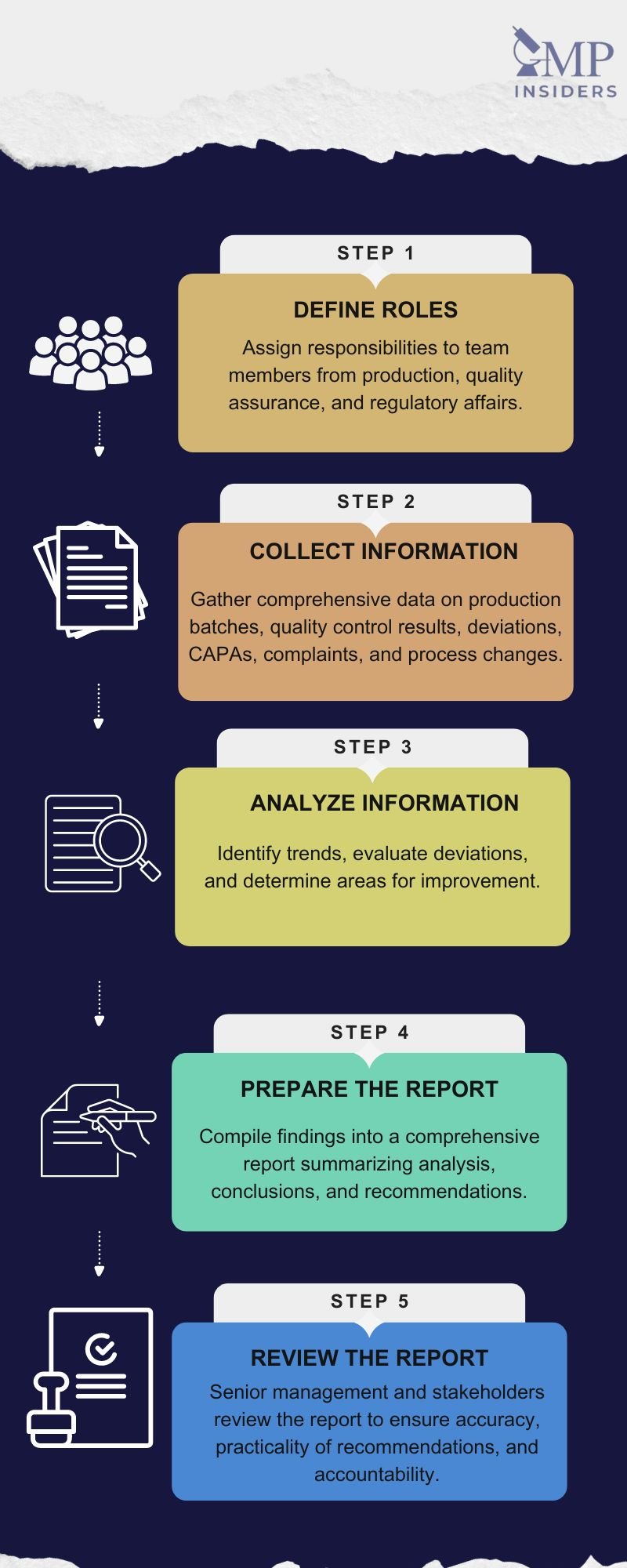
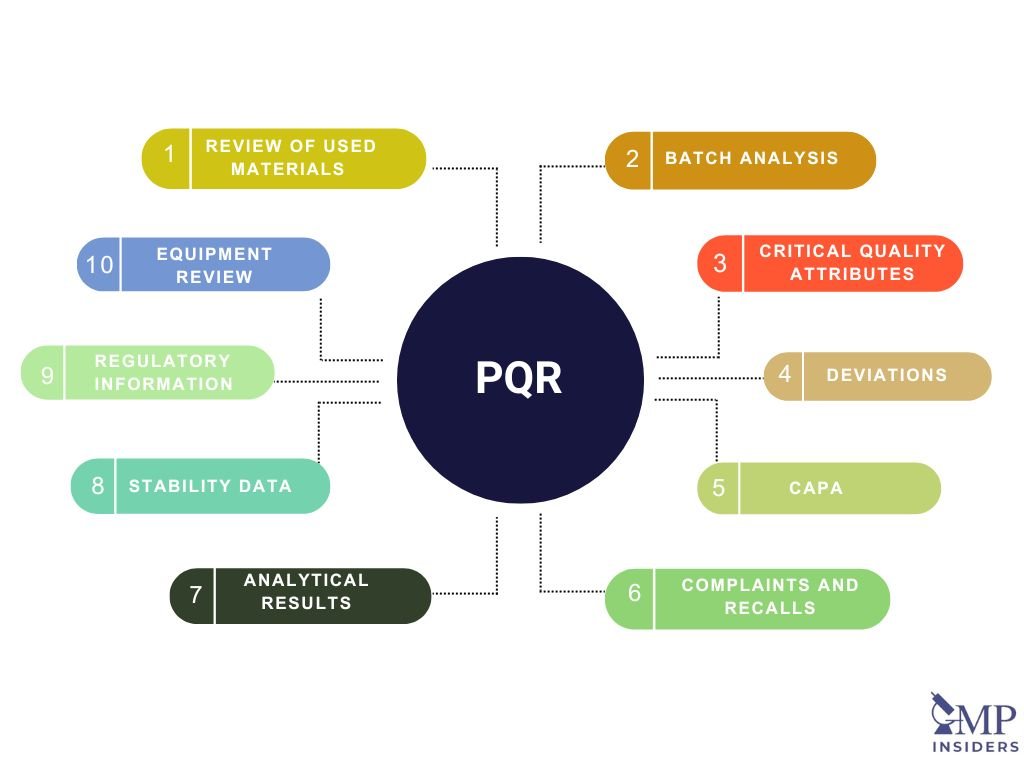
Product Quality Reviews (PQRs) serve as a cornerstone in GMP, comprehensively evaluating production and quality control processes. This systematic review confirms product quality and consistency and identifies areas for improvement, ensuring that every batch produced meets the highest standards.
In this article, we will look into the essential components, objectives, and challenges of PQR, highlighting its critical role in maintaining the integrity of pharmaceutical products.
What is a PQR?
A Product Quality Review (PQR) is a comprehensive evaluation of the production and control of a pharmaceutical product. It is designed to verify the consistency of the process, identify any trends, and ensure that the product remains in compliance with regulatory standards.
PQRs are essential for maintaining the integrity and safety of pharmaceutical products, providing a detailed review of every aspect of production from raw materials to finished products.
RELATED: Different Types of GMP Documentation Used In Pharma Industry
Purpose of PQR
The primary purpose of a PQR is to systematically evaluate the quality of a pharmaceutical product over a specified period. This ongoing assessment ensures that the manufacturing processes consistently produce products that meet predefined quality standards and regulatory requirements. By reviewing data from various batches, PQR aims to achieve several critical objectives:
1. Confirm Product Quality
- Verification of Quality Attributes: PQR helps to verify that each batch of the product meets the intended quality attributes, such as purity, potency, and stability. This ensures that the product is safe and effective for patient use.
- Consistency Across Batches: It confirms that the manufacturing process consistently produces batches of the product with uniform quality, thereby ensuring reliability and trust in the product.
2. Identify Areas for Improvement
- Process Optimization: By analyzing data from multiple batches, PQR can identify any variations or inefficiencies in the production process. This insight allows for targeted improvements and optimizations to enhance overall process efficiency and product quality.
- Corrective Actions: It highlights areas where corrective actions are needed to address deviations or non-conformities that could impact product quality.
3. Ensure Regulatory Compliance
- Adherence to Standards: PQR ensures that the manufacturing processes comply with regulatory requirements set by authorities such as the FDA and EMA. This compliance is essential for maintaining product approval and market authorization.
- Documentation and Traceability: The review process ensures comprehensive documentation of all manufacturing activities, providing traceability and accountability, which are critical for regulatory inspections and audits.
4. Detect Trends and Anomalies
- Trend Analysis: PQR involves the analysis of data over time to identify trends, such as recurring deviations or gradual shifts in process parameters. Early detection of such trends allows for proactive measures to prevent potential quality issues.
- Outlier Detection: It helps detect outliers that may indicate underlying issues in the manufacturing process. Addressing these anomalies promptly helps maintain consistent product quality and prevents potential risks to patient safety.
Frequency of PQRs
The frequency of conducting Product Quality Reviews (PQRs) is typically on an annual basis. This annual frequency is a regulatory requirement set by major health authorities, such as the U.S. Food and Drug Administration (FDA) and the European Medicines Agency (EMA). Conducting PQRs annually ensures continuous monitoring and improvement of product quality, which is essential for maintaining the integrity and safety of pharmaceutical products.
FDA Requirements
According to the FDA, as specified in 21 CFR Part 211.180(e), pharmaceutical companies are required to conduct an Annual Product Review (APR). This review must include an evaluation of all batches produced and highlight any trends or deviations that could impact product quality.
The annual review helps ensure that the product consistently meets quality standards and identifies any necessary adjustments or improvements in the manufacturing process.
EMA Requirements
The EMA outlines its requirements for Product Quality Reviews in Chapter 1 of EudraLex Volume 4, specifically in Section 1.10. This section mandates that marketing authorization holders conduct an annual PQR. The review should cover all batches released, returned, or rejected and evaluate any deviations or changes that could affect product quality.
This annual review is crucial for maintaining compliance with EMA regulations and ensuring that the product remains safe and effective for patients.
What If No Batches Are Manufactured In the Year?
If no batches of a particular product are manufactured during a given year, it is still essential to conduct a PQR. The focus of the PQR in such cases will be on confirming that there were no production activities and ensuring that all systems remain ready for future manufacturing. This includes:
- Review of the Previous Year’s Data: Analyze the data and trends from the last period when batches were produced. Ensure that any previously identified issues have been resolved and that the corrective actions taken are still effective.
- Verification of Readiness: Confirm that all equipment, facilities, and processes are maintained in a state of readiness for future production. This includes performing necessary maintenance, calibration, and validation activities.
- Regulatory Compliance: Ensure that all regulatory requirements and standards are continuously met, even in the absence of production. This includes maintaining up-to-date documentation and being prepared for any regulatory inspections or audits.
- Training and Competency: Verify that staff training and competency are maintained. Ensure that personnel are ready to resume production activities as soon as it becomes necessary.
- Evaluation of Market and Supply Chain: Assess the market demand and supply chain to ensure that the company is prepared to respond quickly when production resumes. This includes verifying the availability of raw materials and ensuring that supplier qualifications are up to date.
RELATED: Supplier Qualification in GMP