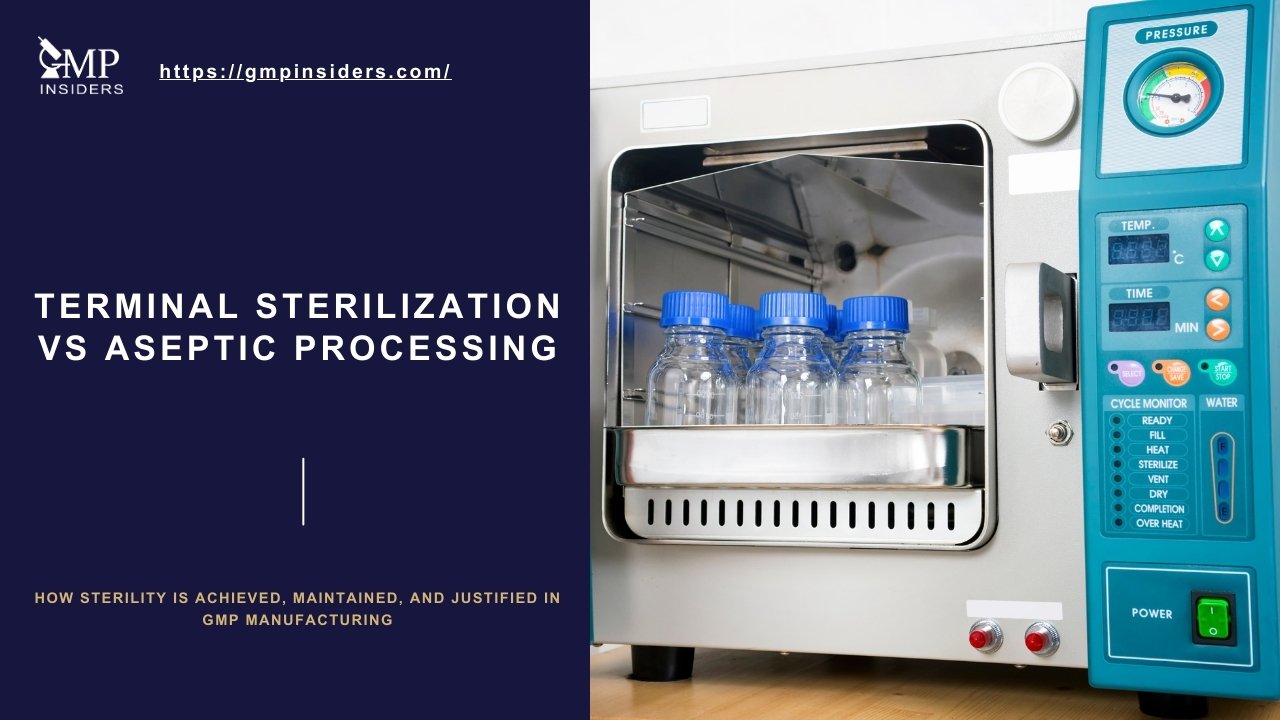
Terminal sterilization and aseptic processing are the two primary methods used to produce sterile medicinal products. Both approaches aim to prevent microbial contamination, but they differ significantly in process design, sterility assurance level, risk profile, and regulatory expectations.
Regulatory authorities, including the EMA and FDA, emphasise that terminal sterilization should be used whenever the formulation and packaging allow it, as it provides the highest sterility assurance level. When a product cannot withstand heat or radiation, aseptic processing is required, demanding stringent environmental controls, validated aseptic techniques, and continuous monitoring.
This article outlines the principles of terminal sterilization and aseptic processing, compares their applications in GMP manufacturing, and explains how product characteristics, process risks, and regulatory requirements determine the appropriate method.
Sterility Assurance
Sterility assurance is a process-driven concept that describes the level of confidence in a medicinal product’s sterility, based on its manufacturing, control, and validation. It does not rely solely on sterility testing, but on the overall manufacturing process’s ability to consistently prevent or eliminate microbial contamination.
In GMP-regulated manufacturing, sterility is treated as a probabilistic outcome rather than an absolute condition. Regulators, therefore, expect manufacturers to demonstrate control over all steps that can influence microbial risk, including equipment design, environmental conditions, material transfer, and human intervention.
This principle directly underpins the regulatory preference for terminal sterilization, as it creates sterility through a validated microbial inactivation step.
When terminal sterilization is not feasible, sterility assurance must be maintained through aseptic processing. In this case, confidence in sterility is built cumulatively across multiple controls rather than achieved in a single step. Understanding this distinction is essential before comparing sterility assurance levels, validation strategies, and risk profiles between terminal sterilization and aseptic processing.
What is Terminal Sterilization (TS)?
Terminal sterilization is the process by which a pharmaceutical product is sterilized after it has been filled and sealed in its final container. This method eliminates all viable microorganisms, including bacterial spores, from the product and its packaging in one complete sterilization cycle.
The key distinction is that sterilization is applied to the finished product as a whole, rather than sterilizing components separately and assembling them in sterile conditions (as in aseptic processing). This significantly reduces the risk of post-sterilization contamination, making terminal sterilization the preferred method for sterile drug manufacturing whenever feasible.
Sterility Assurance Level (SAL)
SAL is a probabilistic measure of the effectiveness of a sterilization process. A terminal sterilization cycle must be validated to achieve an SAL of 10⁻⁶, corresponding to a 1-in-a-million probability that a single viable microorganism could survive on a sterilized item.
This level of assurance is significantly higher than what is typically achievable with aseptic processing, making terminal sterilization the gold standard when applicable.
Validation of the SAL includes:
- Microbiological inactivation studies
- Worst-case load configuration testing
- Use of biological indicators (e.g., Geobacillus stearothermophilus spores for steam)
Common Terminal Sterilization Methods
Several validated methods are used in pharmaceutical manufacturing to achieve terminal sterilization, each selected based on the product’s formulation, container compatibility, and regulatory considerations. The most common methods include:
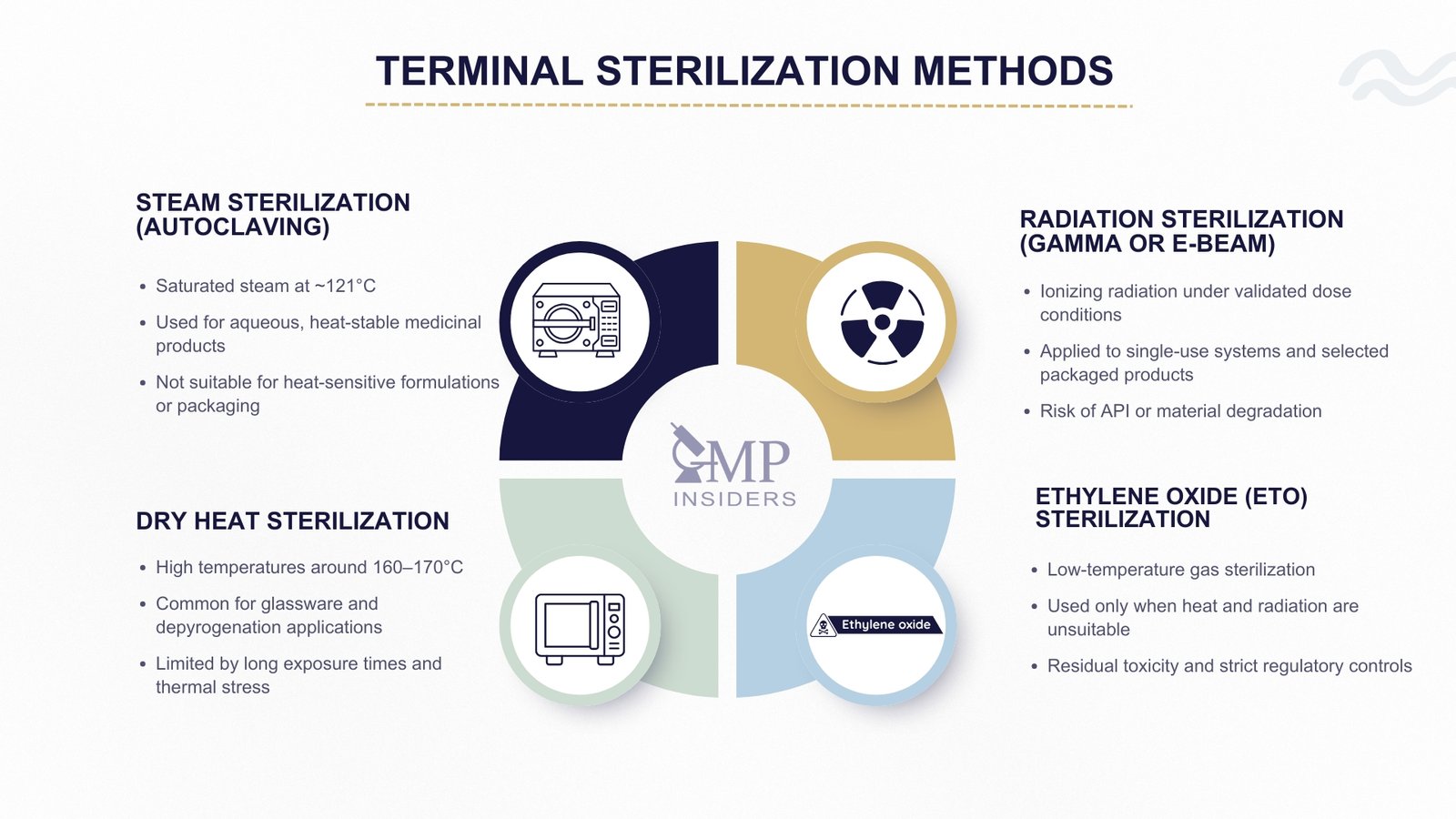
Steam Sterilization (Autoclaving)
- Uses saturated steam at high pressure, commonly at 121°C for 15–30 minutes.
- Highly effective against bacteria, spores, and fungi.
- Suitable for aqueous solutions, ophthalmic preparations, and heat-stable injectables.
- Must be monitored for temperature, pressure, and time using calibrated sensors and biological indicators.
Dry Heat Sterilization
- Typically operated at 160–170°C for 2–3 hours, depending on load and load size.
- Used for sterilizing non-aqueous preparations, glassware, and metal equipment.
- Also employed for depyrogenation, especially in the terminal sterilization of empty vials.
Radiation Sterilization (Gamma or E-beam)
- Employs ionizing radiation, usually gamma rays or electron beams.
- Commonly used for single-use devices, surgical materials, and some pharmaceuticals in specialized packaging.
- Requires careful dose mapping and shielding studies to ensure even exposure.
Ethylene Oxide (EtO) Sterilization
- A low-temperature gas sterilization method suitable for products that cannot tolerate heat or radiation.
- Rarely used for terminal sterilization of pharmaceuticals due to:
- Toxic residues requiring long aeration times
- Strict residue limits imposed by regulatory authorities (e.g., ICH Q3C)
When to Use Terminal Sterilization
Terminal sterilization should be selected as the primary sterilization method when product characteristics and packaging systems are compatible with the sterilization conditions. Regulatory authorities consider it the preferred approach due to its higher sterility assurance level and reduced contamination risk.
Terminal sterilization is appropriate when:
- The product formulation is stable under heat, radiation, or gas exposure
- The container and closure system can maintain integrity after sterilization
- The product is a small molecule solution, ophthalmic product, or irrigation fluid
- The manufacturing site has validated sterilization equipment and trained personnel
- The regulatory framework (e.g., EMA Annex 1) supports its use without exception
Typical product types suitable for terminal sterilization include:
- Small-molecule aqueous injectables (e.g., paracetamol, antibiotics)
- Large-volume parenterals (LVPs) and infusion solutions
- Irrigation fluids used in surgical procedures
- Ophthalmic solutions in multidose containers
- Dialysis concentrates and electrolyte solutions
- Some prefilled syringes and ampoules, if compatible with sterilization conditions
- Blow-fill-seal (BFS) containers when formulation allows
These products are usually simple in composition, free of thermolabile ingredients, and packaged in materials that can withstand high temperature or radiation without compromising performance.
Advantages of Terminal Sterilization
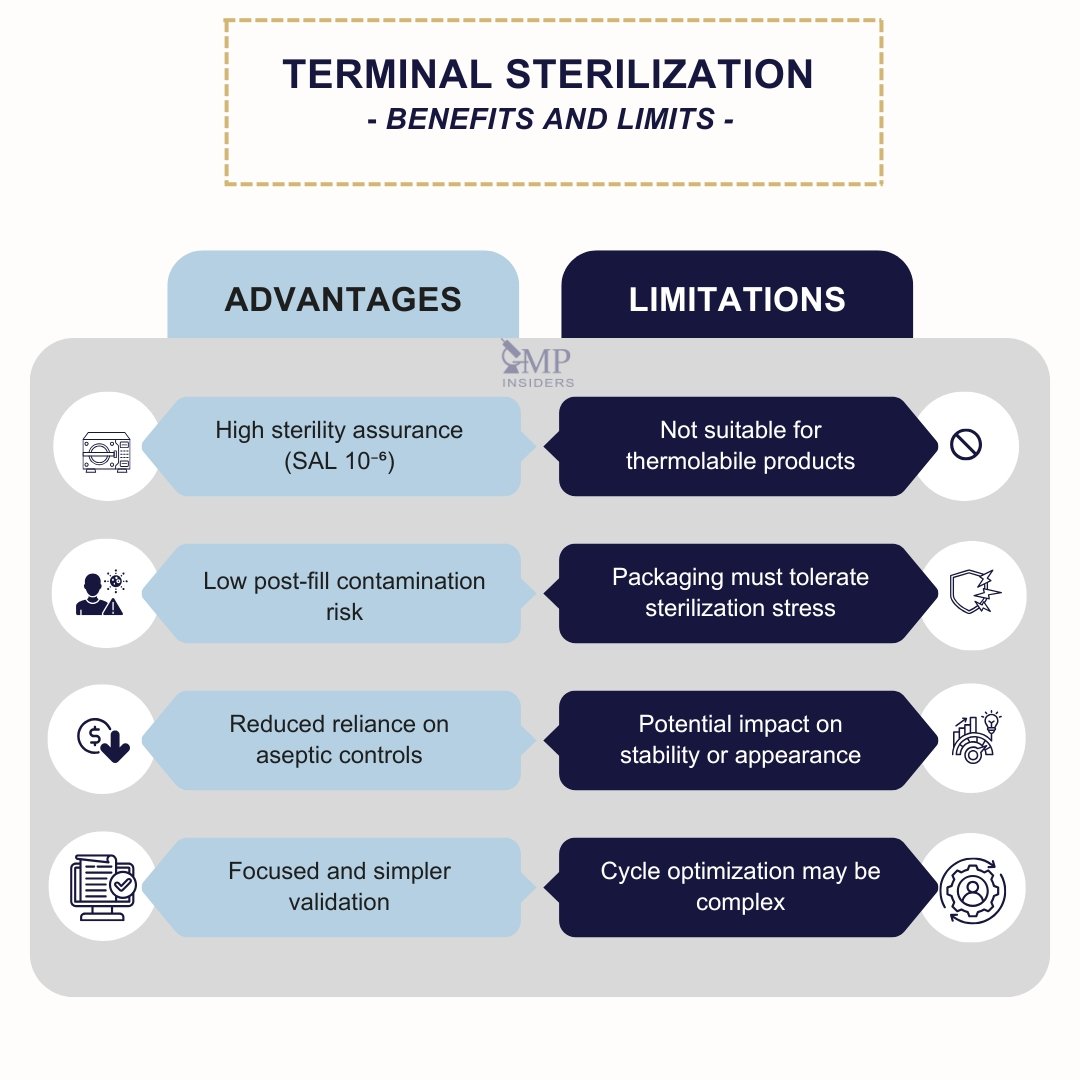
Terminal sterilization offers several operational and compliance benefits, making it the preferred method for sterile manufacturing when product characteristics allow. These advantages include:
- High Sterility Assurance: A validated SAL of 10⁻⁶ provides a robust level of sterility assurance that is difficult to achieve with aseptic processes.
- Reduced Risk of Contamination: Because the product is sterilized after sealing, the risk of contamination during manufacturing, handling, or packaging is significantly reduced.
- Simplified Aseptic Controls: Reduces the reliance on high-grade cleanroom environments and operator interventions during filling operations.
- Easier Validation and Routine Monitoring: Validation focuses primarily on the sterilization cycle itself, rather than on the entire production environment and aseptic handling.
- Lower Environmental Monitoring Burden: Cleanroom requirements and monitoring frequency can be less stringent than those for aseptic processing.
Limitations of Terminal Sterilization
Despite its benefits, terminal sterilization is not universally applicable. Product sensitivity, packaging limitations, and process compatibility constrain its use. Key limitations include:
- Product Incompatibility: Many biological products (e.g., monoclonal antibodies, vaccines, recombinant proteins) are thermolabile and cannot withstand steam or dry heat sterilization. Others may degrade under radiation or EtO exposure.
- Packaging Constraints: The container closure system must withstand sterilization conditions without compromising container integrity (e.g., plastic deformation, seal breakdown, or label degradation).
- Physicochemical Changes: Exposure to high temperature or radiation may alter the drug’s potency, stability, or appearance. Even excipients may undergo undesirable changes (e.g., discoloration, precipitation).
- Cycle Development Complexity for Certain Products: Some products require extensive testing and cycle optimization to avoid damage while still ensuring microbial lethality.
SEE ALSO: Moist Heat Sterilization in GMP
What is Aseptic Processing?
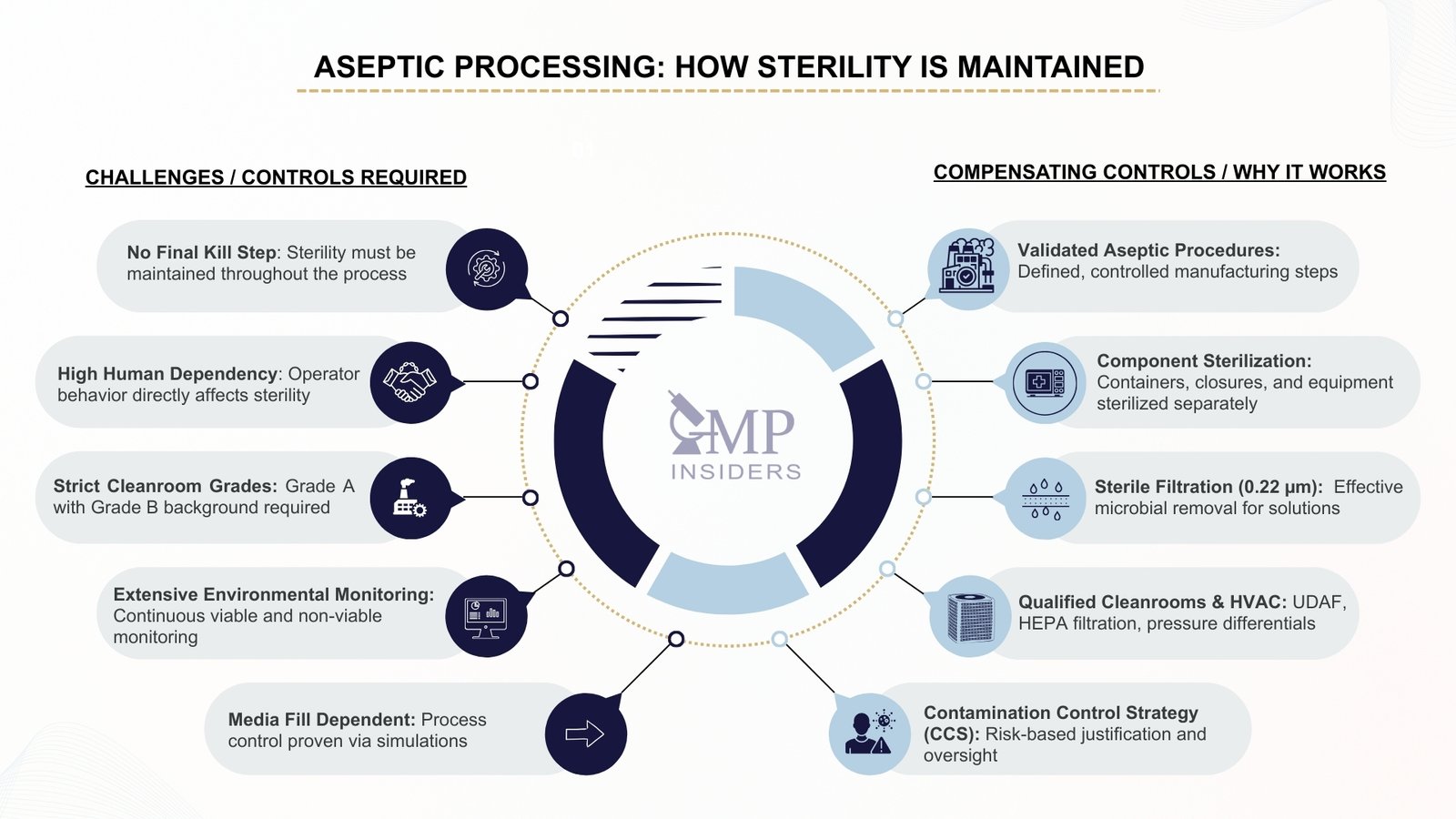
Aseptic processing is a sterile manufacturing method in which the drug product, primary packaging components, and equipment are sterilized separately and then assembled under strictly controlled conditions to maintain sterility. No final sterilization step is applied to the filled product, making contamination control essential at every stage.
Unlike terminal sterilization, aseptic processing does not rely on a single kill step after packaging. Instead, it maintains sterility through a combination of validated procedures, cleanroom controls, operator training, and environmental monitoring.
Cleanroom Requirements
Aseptic processing requires a segregated, controlled environment with strict classification based on the activity being performed. According to EU GMP Annex 1:
- Grade A (ISO Class 5): Required for critical zones such as open filling, stopper insertion, and open container exposure
- Grade B (ISO Class 5/7): Background environment for Grade A zones
- Grade C/D (ISO Class 7/8): Used for less critical operations such as component preparation and solution filtration
All zones must be qualified, routinely monitored, and supported by validated HVAC systems, unidirectional airflow (UDAF), and robust gowning procedures.
SEE ALSO: Pharmaceutical Cleanrooms: Design, Classes and Control in GMP
Sterilization of Components and Filtration
Because the final product is not terminally sterilized, all components and process streams must be sterilized individually:
- Containers and closures are sterilized via dry heat or steam and transferred aseptically.
- Solutions are typically sterilized by filtration through 0.22 µm filters, followed by aseptic transfer into sterile containers.
- Equipment must be sterilized in place (SIP) or sterilized outside and brought into cleanrooms through validated transfer procedures.
The aseptic connection and assembly of these components must occur in Grade A environments with appropriate background conditions.
Media Fill Simulations
To validate the aseptic process, media fill (process simulation) is required:
- Mimics the full manufacturing process using a nutrient growth medium (e.g., tryptic soy broth, TSB)
- Conducted at worst-case conditions to challenge the process
- Performed at initial qualification and periodically (typically semi-annually) for ongoing assurance
- Any microbial growth indicates failure and requires full investigation
Media fills are central to demonstrating state of control and identifying weaknesses in aseptic practices or environmental controls.
Common product types that require aseptic processing include:
- Vaccines (viral vector-based, inactivated, or subunit)
- Monoclonal antibodies (mAbs) and recombinant proteins
- Antibody–drug conjugates (ADCs)
- mRNA therapies and synthetic oligonucleotides
- Cell and gene therapies (ATMPs)
- Hormone-based biologics (e.g., insulin, growth factors)
These products are often complex, unstable under terminal sterilization conditions, and require advanced containment technologies such as isolators, RABS, and validated sterile filtration systems.
SEE ALSO: RABS vs Isolators: Which Barrier System Meets Annex 1 Expectations
Advantages of Aseptic Processing
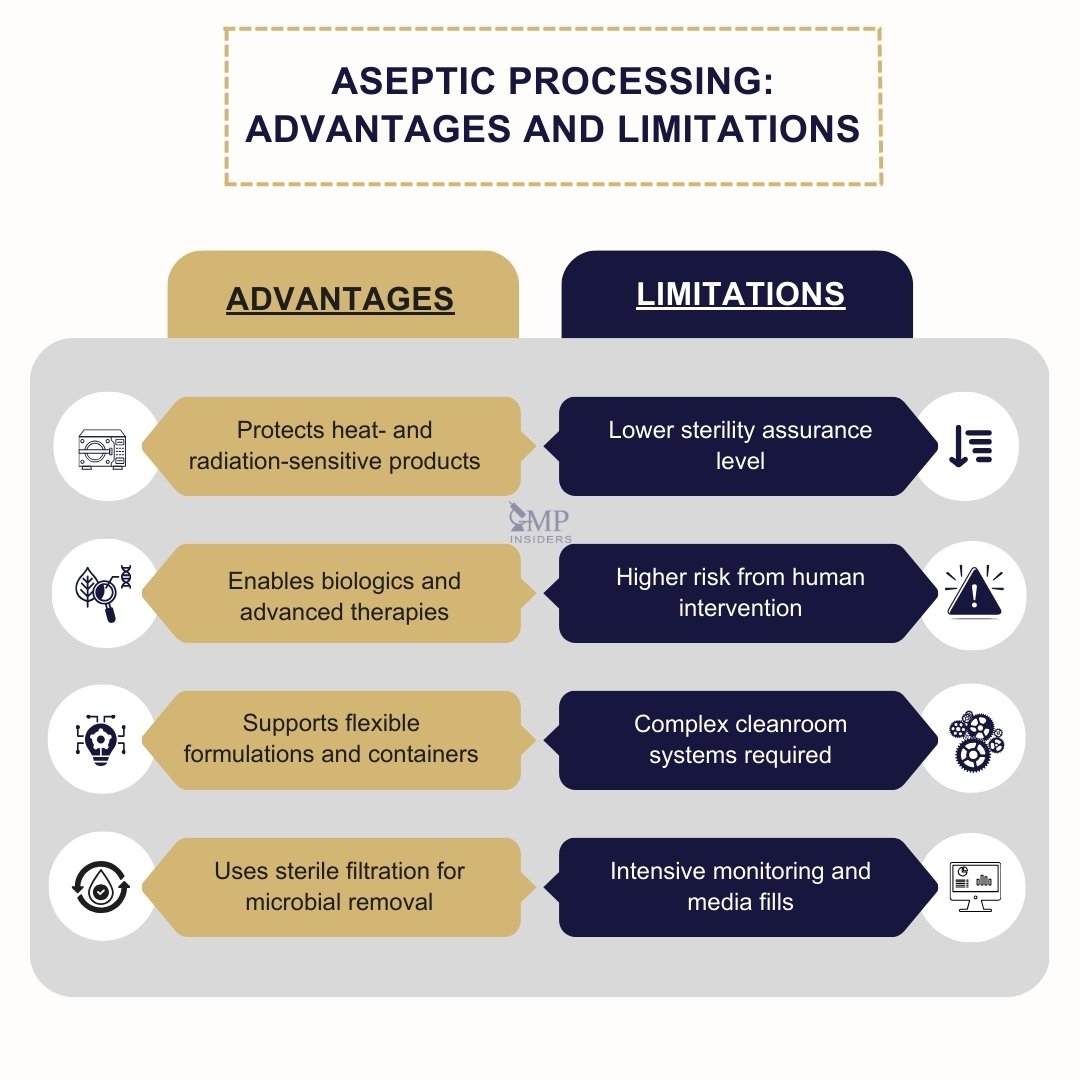
Aseptic processing enables sterile manufacturing for products that cannot withstand terminal sterilization. Its advantages include:
- Preserves product integrity for heat-sensitive and radiation-sensitive formulations
- Applicable to biologics, vaccines, and advanced therapies
- Flexibility in formulation and container design, especially with pre-filled syringes, vials, or dual-chamber systems
- Use of sterile filtration provides effective microbial removal for solutions
Limitations of Aseptic Processing
Despite its necessity for certain products, aseptic processing presents several challenges:
- Lower sterility assurance level (SAL), typically around 10⁻³ to 10⁻⁴, compared to 10⁻⁶ for terminal sterilization
- High risk of contamination, especially from human intervention or environmental exposure
- Extensive environmental and personnel monitoring requirements
- Complex cleanroom infrastructure, including isolators, RABS, HEPA-filtered airflow, and pressure differentials
- Ongoing media fill validation, requiring time, personnel, and strict compliance with regulatory expectations
- Greater dependency on human performance, necessitating regular training, qualification, and behavioral controls
Key Differences
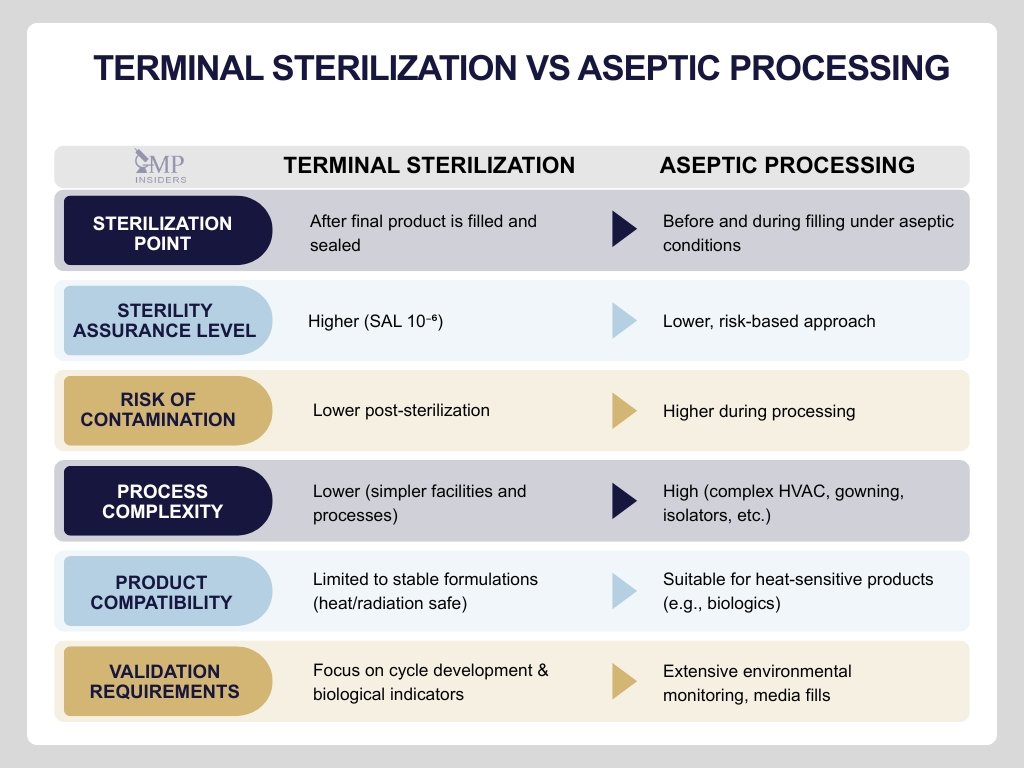
Terminal sterilization and aseptic processing are both designed to ensure product sterility, but they differ significantly in approach, risk level, regulatory requirements, and operational complexity.
Terminal sterilization is favored when feasible due to its higher sterility assurance level and simplified contamination control strategy. However, product limitations often necessitate aseptic processing, which involves greater process control and environmental monitoring.
The table below summarizes the major differences between the two methods from a GMP manufacturing perspective:
Which Method Is Right for You?
Choosing between terminal sterilization and aseptic processing depends on a combination of product characteristics, regulatory expectations, and facility capabilities. Regulatory agencies consistently emphasize that terminal sterilization is the method of choice when feasible, but it’s not always suitable for every product or formulation.
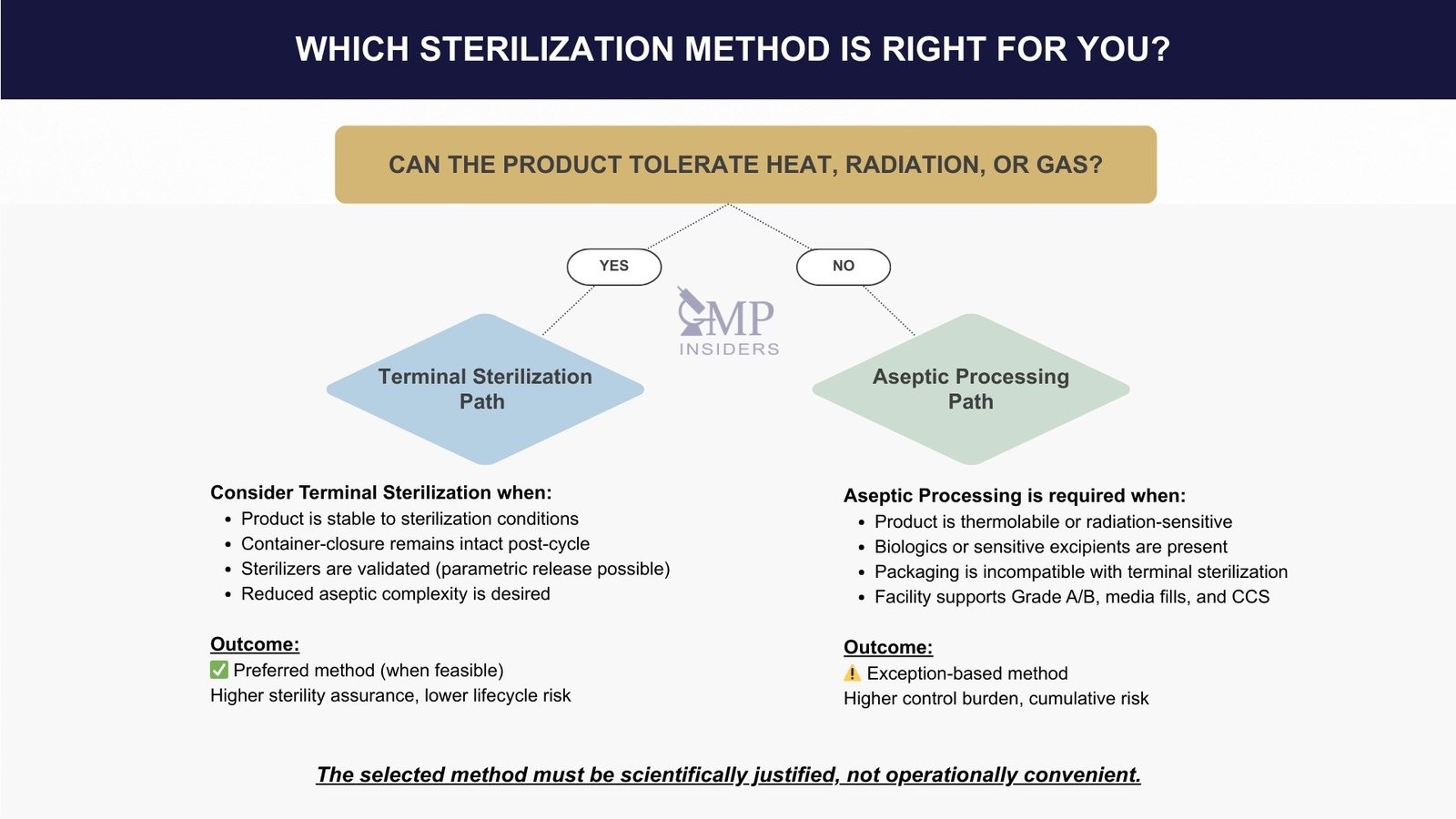
You should consider terminal sterilization when:
- The product can tolerate heat, radiation, or gas without degradation
- The container-closure system remains intact and functional post-sterilization
- Your facility has validated sterilizers and the ability to perform parametric release
- You aim to reduce complexity in aseptic handling and post-fill contamination control
Aseptic processing is necessary when:
- The product is thermolabile or cannot withstand sterilization conditions
- The formulation contains biologics, emulsions, or sensitive excipients
- Your packaging system or delivery format is incompatible with terminal sterilization
- You are equipped to support strict cleanroom controls, operator training, and ongoing media fill validations
In every case, the decision must be supported by:
- Scientific justification (e.g., degradation studies)
- Risk assessments following ICH Q9 principles
- Alignment with regulatory guidance (e.g., EU GMP Annex 1, FDA guidance)
- A validated Contamination Control Strategy (CCS) embedded into your QMS
The right method is not just about compliance, it’s about designing a process that ensures product sterility, patient safety, and manufacturing reliability.
Regulatory Guidelines and Expectations
Sterile manufacturing processes are governed by internationally harmonized GMP standards, supported by region-specific guidelines. These documents outline when terminal sterilization should be applied and under what conditions aseptic processing is acceptable.
Below is a summary of the key regulatory guidelines and their expectations regarding sterile product manufacturing:
EU GMP Annex 1
Title: Manufacture of Sterile Medicinal Products
Authority: European Medicines Agency (EMA)
Key Expectations:
- Terminal sterilization is the preferred method and must be used when product formulation and container can withstand it.
- Aseptic processing is permitted only when terminal sterilization is not possible, and this must be scientifically justified.
- Manufacturers must document the rationale for selecting aseptic processing, including:
- Product sensitivity studies
- Container compatibility data
- Risk assessments
- A formal Contamination Control Strategy (CCS) must be in place, covering facility, process, equipment, and personnel controls.
- Media fill simulations must be conducted to validate aseptic operations.
- Parametric release may be used for terminally sterilized products if the process is validated and controlled in real time.
FDA Guidance for Industry
Title: Sterile Drug Products Produced by Aseptic Processing: Current Good Manufacturing Practice
Authority: U.S. Food and Drug Administration (FDA)
Key Expectations:
- Encourages terminal sterilization wherever feasible, as it offers greater assurance of sterility.
- Aseptic processing introduces more variables and human-related risks; requires strict environmental and personnel control.
- Emphasizes facility design, airflow control, and personnel qualification in aseptic operations.
- Requires cleanroom classification (ISO 5 for critical zones) and continuous environmental monitoring.
- Sterility testing alone is not sufficient for product release; full process validation and media fill studies are mandatory for aseptic operations.
- Accepts parametric release for terminally sterilized products under validated conditions.
WHO Annex 6
Title: WHO Good Manufacturing Practices for Sterile Pharmaceutical Products
Authority: World Health Organization (WHO)
Key Expectations:
- Recommends terminal sterilization as the method of choice when possible.
- Accepts aseptic processing for heat- or radiation-sensitive products, with clear justification.
- Requires cleanroom design and monitoring according to ISO 14644-1 standards.
- Environmental monitoring programs must be validated and based on process risk.
- Media fill trials are mandatory and must simulate worst-case operational conditions.
- Provides guidance for use of isolators, RABS, and barrier technologies in aseptic setups.
ISO 13408 Series – Aseptic Processing of Health Care Products
Authority: International Organization for Standardization (ISO)
Key Expectations:
- Focuses on aseptic processing and sterilization validation principles.
- ISO 13408-1: General requirements for aseptic processing
- ISO 13408-2: Sterilizing filtration
- ISO 13408-5: Aseptic handling and process simulation
- Reinforces the need for validated sterile filtration, aseptic connections, and operator control.
- Often used in combination with GMP requirements for combination products or biologics.